
The following candidates have been nominated for positions on the AWU-CWA Local 9009 Executive Board, in accordance with the
2026 AWU Election and Campaign Rules
2026 AWU Election Notice (and timeline)
Questions? Contact elections@alphabetworkersunion.org
In the recent election, no candidate for the office of
Organizing Chair reached the 50% + 1 threshold for winning in the first round so we will be holding a run-off election starting Monday October 26th and ending Friday November 6th at 11:59 PT. The top two candidates who will appear on the
run-off ballot will be:
Alan McAvinney who received 240 votes
Gavin Achtemeier who received 165 votes
The following statements are written by the candidates and posted without any input from the Elections Committee.
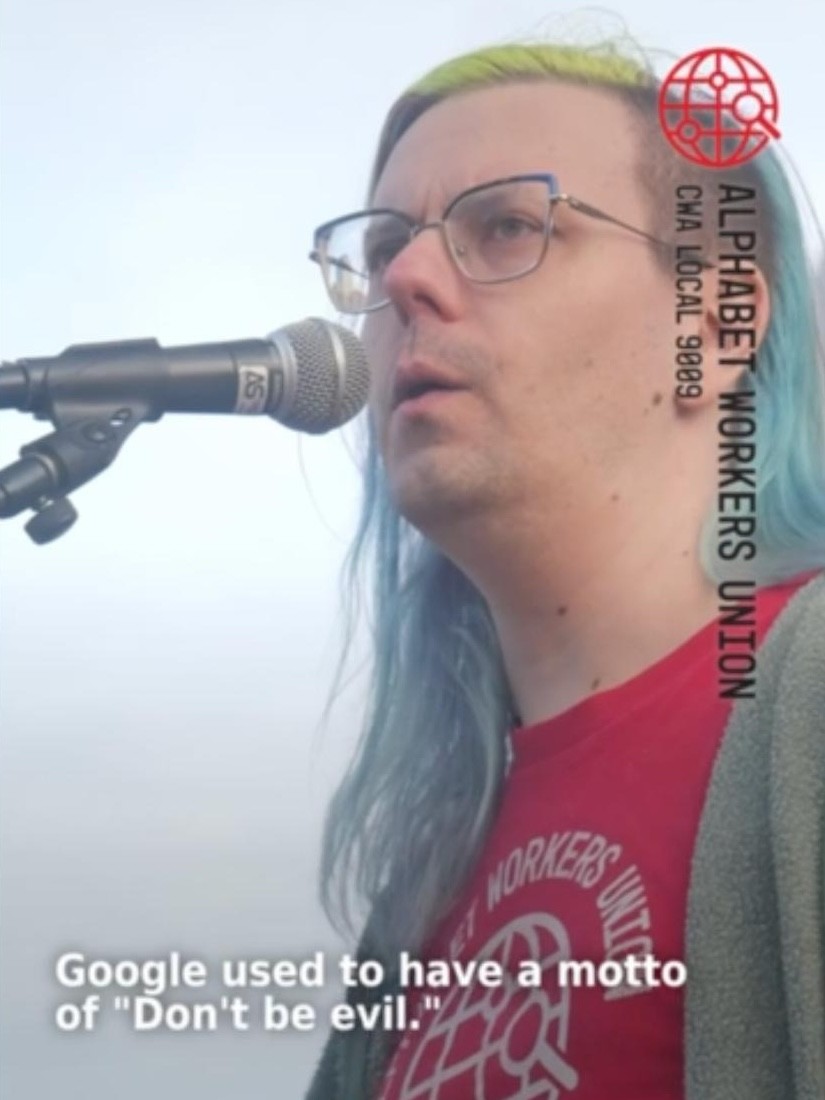
Seven years ago, Google retaliated against my coworkers for speaking up about a CBP contract. I've been organizing ever since. I watched the 2023 and 2024 mass layoffs, helped build a strong chapter in my office, and was elected Organizing Chair on our Executive Board.
When I started, our national Organizing Committee was small and disconnected from day-to-day organizing. Working with our staff, I formed it into a structure that brought our union's site-based organizing committees and chapters together to coordinate our first national actions and build our first national campaign, leading to VEPs, our biggest wins yet! Next, I want to support our chapters' growing leadership, bring new organizing committees into what is now the International Organizing Committee (IOC), and strengthen it as a space for sharing lessons and tactics. I also want to facilitate cross-chapter connections through discussion and meeting spaces beyond IOC meetings. The relationships and trust built there let us move together as one union.
I'm proud of what our union has achieved, and I'm running again because we've only scratched the surface of what we can do. In April, I helped lead us in shifting our growth strategy. This idea draws on a core lesson from the labor movement: roughly a quarter of workers start out already positive toward our union. At a workplace our size, that's a huge swath of people, many of whom have never been asked to join. Instead of focusing only on people we knew personally or on a single issue, we set out to have at least one good one-on-one conversation with as many coworkers as possible, share our union's vision, and make a compelling ask to join. To get better at these conversations quickly, newer organizers paired with staff organizers. I started with my home office, Cambridge, where we could experiment quickly. It's already working: over 7% of the more than 2,200 people in our Cambridge office are now AWU members.
Cambridge was only the start. As Organizing Chair, my job is to think beyond my own chapter to our entire union, especially our biggest offices. We quickly expanded the approach to MTV and NYC, kicking off some of our fastest growth yet. It's helping us grow everywhere we bring it, and I know we can keep expanding and refining it.
This organizing strategy isn't happening in a vacuum. AI is rapidly changing our jobs. We don't know what the last two years of Trump 2.0 will involve, but we know Sundar won't make the same choices that we as workers would. I look forward to helping us improve at reacting nimbly, like the H-1B visa press conference, without compromising our ability to drive issues over extended periods. We have enormous opportunities ahead and together we can rise to meet them. If you believe in this vision, I'm asking you to vote for me, Parul for President and Olivia for Vice President as the GROW slate, which captures our vision: Grow our Ranks, Organize to Win.
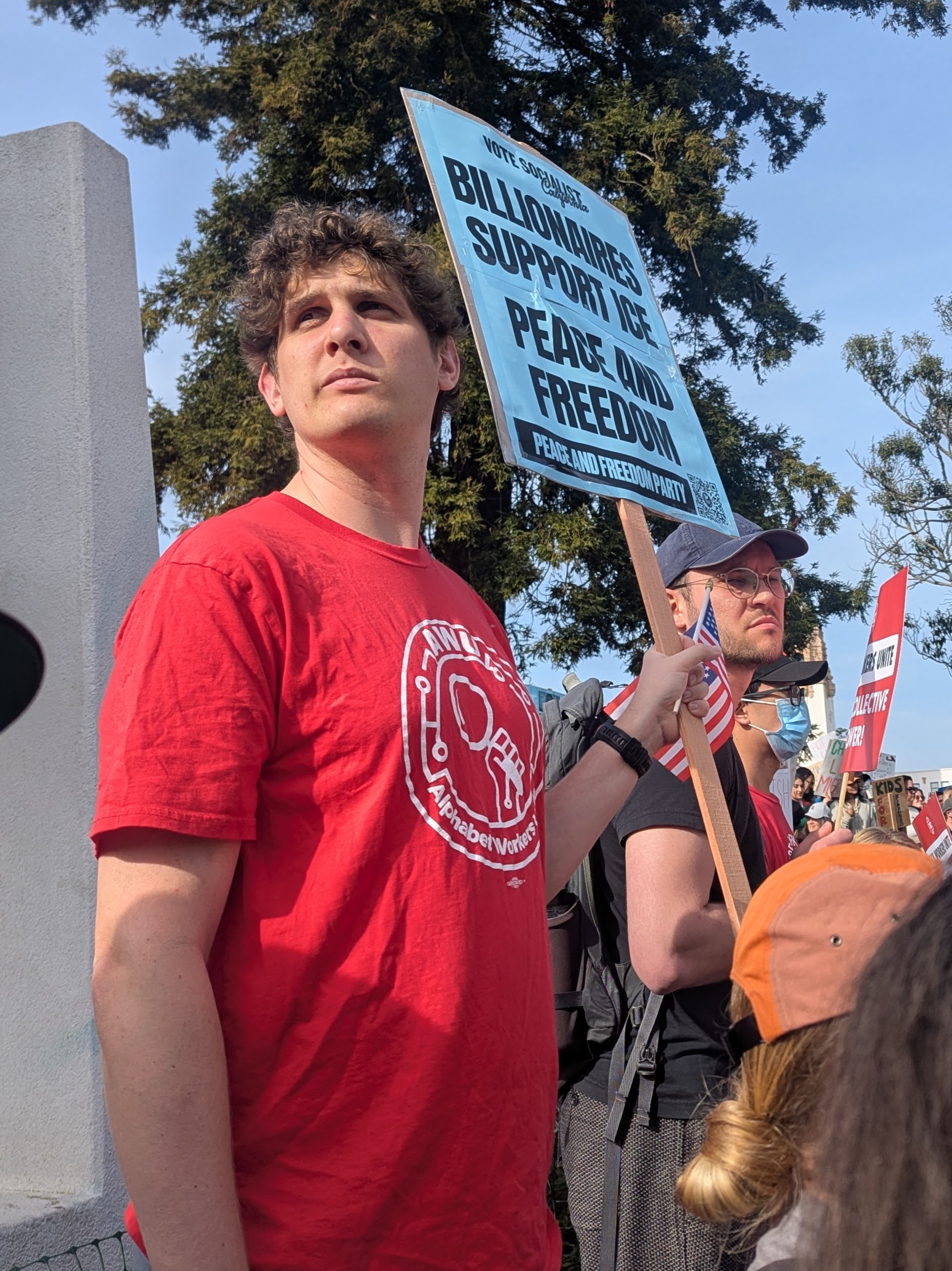
I joined AWU because I believe in democracy, and that includes a democratic workplace with a say for all our coworkers.
To that end, we need better strategy, better internal communication, good staff management, and an urgency that gives us a chance to win a real voice at work within the next couple of years. I intend to make these changes as Organizing Chair, and I have the track record and experience to back it up.
Strategy.
AWU needs a strategy: a credible plan to win. Even among our most effective and dedicated organizers, I don't see that conversation happening at the level it needs to.
I’ve been leading from the ground and experimenting with strategies for two years: Rallying people to respond to and organize around smaller layoffs. Bringing Share My Salary, the longest-running collective action campaign at Google, into our union. Monitoring Google’s compliance with labor law and publicly asking the City and State to hold Google accountable when Google breaks the law. I didn't do these alone, or write a doc and walkaway: These came together by drawing in smart organizers and newly-energized members and coworkers and harnessing our collective intelligence and energy. I want to empower members to organize by providing clear process, structure, and norms that give new initiatives a pipeline: from experiment to repeatable playbook.
Urgency.
We need to grow to a point where we have strategic leverage, and soon.
Either AI will live up to its hype, or it won’t. Both extremes are bad for Google workers, and investor pressure is growing.
Many of our coworkers are understandably skeptical that our union is the right solution to the problems we face at Google today. If the vision is “one day far in the future this effort will solve these problems,” we are not going to make progress. I want to align our organizers on a credible plan to win in the next 2-4 years.
Focus on Growth Sites.
The SF Bay represents ~40% of US/Canada FTEs and thousands of TVCs. This is a unique location that needs investment to make AWU successful. Not having a nearby board member has limited our access to information and decisions, while understaffing limits our ability to execute. Additionally, we've acutely felt a need for good management of staff - over half of AWU's staff have turned over in the last year.
Communication and Participation.
Communication structures and systems need to be a top priority of the board. Currently, important news about changes in our workplace and our union does not travel.
Despite their best intentions, I think our board has been too opaque, even to committed organizers. That has negatively impacted leadership development and the ability for us to act quickly. Even complex topics should be passed down to membership via organizing structures.
I am deeply involved in union-wide organizing. I’ve worked to build bridges across AWU, between TVCs and FTEs, and between sites - I have organized in-person in Cambridge, Chicago, Seattle, and New York.